Routes, timing and the checks that matter
Sailing the Indian Ocean from Mauritius: What to Know Before You Go
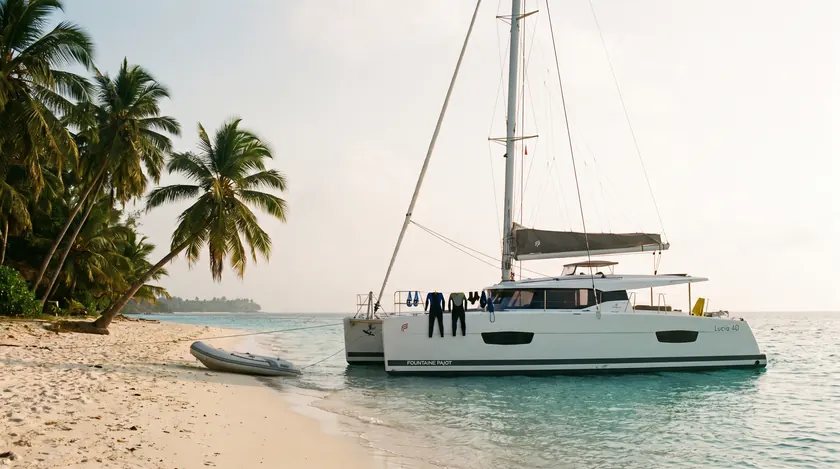
Mauritius sits on one of the Indian Ocean's genuine crossing routes, not just a resort stop. Yachts working west from the Maldives, Chagos or Seychelles side toward South Africa commonly break the passage here, and again at Rodrigues and Reunion, before rounding the Cape.
We are brokers, not routing meteorologists, so this guide stays inside our lane: where boats actually stop, what the marinas here offer an arriving yacht, and the checks a serious skipper runs before committing to any leg of this route. For the weather itself, always defer to a professional router and the Mauritius Meteorological Services forecast, not a pilot guide written months in advance.
What's the best time of year to sail from Mauritius?
December to March is the window cruisers favour for this stopover pattern, based on the cruising guidance we track. Read that window carefully though, it sits inside the Southwest Indian Ocean's cyclone season, which is exactly why this is a routing decision to run past a professional weather router and the Mauritius Meteorological Services forecast before you lock in dates, not something to plan purely off a pilot guide written months ahead.
We will not hand you a specific wind or wave figure for a date that far out, and neither should anyone else. The honest version of this answer is qualitative: watch the forecast daily as your window approaches, keep a plan B anchorage or marina in reach, and treat the favoured months as a starting point for planning, not a guarantee of settled weather.
Do yachts stop at Mauritius when crossing the Indian Ocean?
Yes, routinely. Mauritius, Rodrigues and Reunion, together known as the Mascarenes, are established stopover points for yachts crossing from the Maldives, Chagos or Seychelles side toward South Africa, an alternative routing to a Seychelles-only stop. The appeal is straightforward: three landfalls close enough together to break a long ocean leg into manageable hops, each with fuel, provisioning and repair access before the next stretch.
Rodrigues sits further out again, and boats making the full Mascarenes run typically treat it as a separate leg with its own weather check, rather than folding it into the Mauritius-Reunion hop without a second look at conditions.
How far is Mauritius from Reunion by boat?
About 120 nautical miles separate the two islands, close enough to sail as a single purposeful offshore hop or to break into shorter lagoon-hopping day sails, depending on your boat's speed and the weather window you are given. Either way, treat it as a genuine offshore passage, not a coastal potter, the open water between the two islands has no intermediate shelter if conditions turn.
What are the sailing conditions like around Mauritius and Reunion?
We will not invent numbers here, and any guide that hands you specific wind speeds or wave heights for a date months out is guessing. What we can tell you is qualitative and worth planning around: reef passes on both islands need daylight pilotage, do not plan an arrival that puts you working a reef entrance at dusk or in the dark. Austral-winter trade winds and Southern Ocean swell can make some entrances genuinely difficult later in the season, part of why the December to March window exists in cruising guidance in the first place, even though it overlaps cyclone risk.
Run the same checks a careful skipper runs anywhere: a current forecast from the Mauritius Meteorological Services, a professional weather routing briefing before you commit to an offshore leg, and a realistic look at your own boat's ability to divert or hold position if the forecast changes mid-passage. None of that is unique to the Indian Ocean. It matters more here because your next reliable haul-out or repair yard is genuinely a long way off.
Where do you arrive and berth in Mauritius?
Three facilities cover most of the island's yacht traffic, and they serve different purposes. Le Caudan Waterfront Marina in Port Louis, known locally as the Bassin des Chaloupes, has 20 berths with power and water, showers and laundry, right in the central harbour, though depth varies 2 to 4 metres at low tide, worth checking against your draft before you commit to a berth there. La Balise Marina at Black River is built to full international standard, the island's first at that level, with fuel, maintenance, and on-site restaurants, bars and shopping. Grand Baie Marina, on the north coast, holds roughly 50 berths for yachts up to 30 metres in the island's main tourist and leisure hub.
For an arriving offshore boat, La Balise is the closest thing here to a full-service stop, maintenance plus haul-out, while Grand Baie is more charter and tourism-facing and Le Caudan is the central-harbour, city-berth option. Our best marinas in Africa guide covers how these three stack up against facilities in the other markets we track.
| Marina | Location | Berths | Best for |
|---|---|---|---|
| Le Caudan Waterfront Marina | Port Louis | 20 berths, power and water, depth 2-4m at low tide | Central harbour, city berth |
| La Balise Marina | Black River | Full international-standard facilities, fuel and maintenance | Full-service stop, maintenance plus haul-out |
| Grand Baie Marina | Grand Baie | Roughly 50 berths, yachts to 30m | Charter and tourism hub |
Shopping for a boat able to make this crossing? Tell us the budget, crew and delivery port, and we shortlist from Mauritius and Cape Town.
Ask a questionWhat about registration and paperwork once you arrive?
Mauritius runs a recognised offshore ship registry, no restriction on crew nationality and no work-permit requirement for Mauritius-flagged crew, plus exemption from tax on freight earnings for registered vessels. That reputation is built mainly around commercially structured or corporately owned vessels, typically held through a Global Business Company, not a straightforward private boat stopping over on passage. If you are simply clearing in and out on a cruising permit rather than flagging the boat locally, that offshore-registry framework mostly will not apply to you, confirm your specific situation with a Mauritius-based registration agent before assuming either way.
The Mauritius Ports Authority runs Port Louis and Port Mathurin harbours separately from the yacht registry question, and it is the body an arriving skipper actually deals with for clearance.
Provisioning for the next leg
Whichever of the three marinas you choose, treat Mauritius as a genuine working stop, not just a photo opportunity between ocean legs. Fuel, parts and provisioning here are meaningfully better than anything you will find again before South Africa, and the same applies in reverse if you are heading the other way toward the Seychelles side of this route.
A Fountaine Pajot Lucia 40 or a Lagoon 42 are the two catamaran types we see most often actually making this crossing or turning up for resale here afterward, both have a meaningful secondhand presence in the Indian Ocean charter and cruising market. If you are shopping for a boat capable of this route rather than planning a passage in one you already own, our yachts for sale in Mauritius listings are the place to start, and our Leopard catamaran buying guide covers a survey checklist that applies just as much to a boat about to go offshore.
Boats that make this crossing, and what they cost
If you are buying for the route rather than planning it in a boat you already own, these are the types we track that turn up in the Mascarenes, with 2026 used-market bands from our model pages. Each page lists the survey items that matter before an offshore leg.
| Model | Type | Used range, 2026 | Why it suits the route |
|---|---|---|---|
| Fountaine Pajot Lucia 40 | Sailing catamaran | $229,000 to $440,000 | The type we see most often making this crossing or resold here afterwards |
| Leopard 45 | Sailing catamaran | $500,000 to $800,000 | Cape Town-built, so the Cape end of the route is also the factory's home port |
| Leopard 50 | Sailing catamaran | $849,000 to $1,500,000 | More volume for a long passage with crew aboard |
| Jeanneau Sun Odyssey 490 | Cruising monohull | $440,000 to $700,000 | The monohull answer: berthing priced on length rather than beam |
| Balance 526 | Performance catamaran | $1,250,000 to $2,325,000 | South African-built in St Francis Bay, for faster passages |
What to send before we look for one
Where you want to take delivery, Mauritius or South Africa, the budget, crew size, and whether the boat will cross once or keep cruising; a photo and the listing link if you have already found a candidate. We reply with the boats that fit, their survey points and the paperwork for the flag you intend. The local market is thin, so read yacht for sale in Mauritius and the Mauritius country page on registry and season, and compare with yachts for sale in South Africa, where most of the inventory sits.
Your questions, answered
What's the best time of year to sail from Mauritius?
Cruising guidance favours December to March for this stopover pattern, though that window sits inside the Southwest Indian Ocean cyclone season. Treat it as a starting point for planning, watch the forecast daily as your window approaches, and get a professional weather routing briefing rather than committing to dates off a pilot guide alone.
How far is Mauritius from Reunion by boat?
About 120 nautical miles, sailed either as a single offshore hop or broken into shorter day sails depending on your boat and the weather window. The open water between the islands has no intermediate shelter, so treat it as a genuine offshore passage rather than a coastal hop.
Do yachts stop at Mauritius when crossing the Indian Ocean?
Yes. Mauritius, Rodrigues and Reunion, the Mascarenes, are an established stopover pattern for yachts crossing from the Maldives, Chagos or Seychelles side toward South Africa, an alternative to a Seychelles-only route. Each island offers fuel, provisioning and repair access before the next leg.
What are the sailing conditions like around Mauritius and Reunion?
We keep this qualitative rather than inventing statistics. Reef passes need daylight pilotage, so plan arrivals accordingly, and austral-winter trade winds with Southern Ocean swell can make some entrances difficult later in the season. Check the Mauritius Meteorological Services forecast and get a professional routing briefing before any offshore leg.
Planning a passage through Mauritius
Tell us your route and timing and we will point you to the marina and provisioning contacts that fit, we are brokers, not a weather service, but we know the docks.
Ask a question