Duty, VAT and registration, two markets compared
Importing a Yacht to South Africa or Nigeria: What It Actually Costs
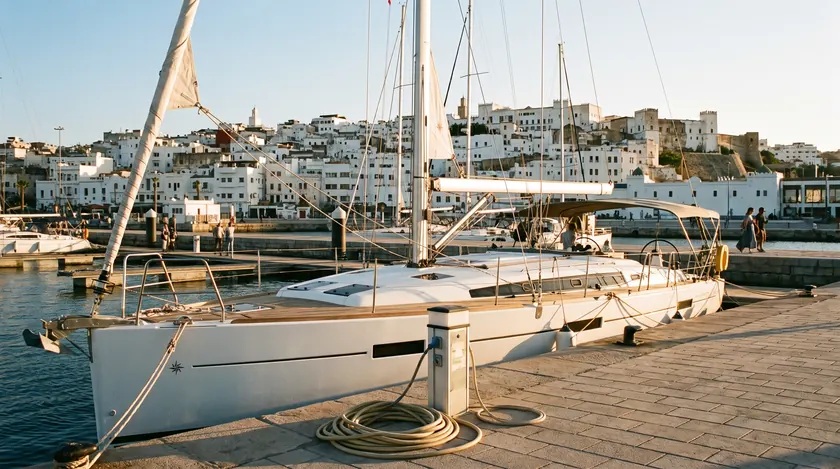
Two very different countries, two very different paperwork piles. A boat entering Cape Town clears through SAMSA and SARS against published duty and VAT rules. A boat entering Lagos clears through NIMASA and Nigeria Customs Service against a process that reads closer to registering a commercial ship than a private yacht.
We handle both sides of this regularly, and the mistake we see most is a buyer pricing the vessel carefully and guessing at everything that happens after it leaves the seller's dock. Below is the real cost and paperwork stack for each country, built from SAMSA, SARS and NIMASA's own published rules, with the parts that are not publicly confirmed flagged as exactly that, not smoothed over.
What duty and VAT applies to importing a yacht into South Africa?
South Africa's rule is origin-based. A yacht built in the EU or the SADC region clears customs duty-free, though VAT still applies. A yacht built anywhere else pays 10 percent customs duty on top of VAT, which sits at the standard 15 percent rate, not the 14 percent some older sources still quote. On a boat with a customs value of $400,000, that is $40,000 in duty plus 15 percent VAT calculated on the duty-paid value, a landed-cost jump worth modelling before you make an offer, not after.
Visiting foreign yachts get a genuine grey area. Most clear in on a DA1 or DA3 as a yacht in transit and are not charged an import-clearance deposit in practice, even though the Customs Act technically permits one on temporary imports. Confirm your exact position with SARS or a clearing agent for your specific itinerary before you assume either outcome. For what it then costs to keep the boat afloat once it has cleared, see our cost of ownership guide for South Africa.
How do you register a boat with SAMSA vs NIMASA?
SAMSA administers the SA Ships Register, and small pleasure yachts under 25 gross tons can register through South African Sailing under Marine Notice 11 of 2005, a relatively light process next to what follows in Nigeria. Most SA-based private yachts fly the South African flag this way, though larger commercial or charter operations sometimes choose an offshore flag for tax or finance reasons, get local tax and legal advice before treating that as a simple either-or choice.
NIMASA's process reads much closer to registering a commercial ship than a private yacht. Cabotage rules also push Nigerian commercial and charter operators toward local registration more firmly than private, personal-use boating, which is a less standardized case worth a direct conversation with NIMASA before you assume your situation fits either box cleanly.
What does it cost to ship a boat to Lagos?
Landed cost in Nigeria stacks several line items on top of the purchase price: freight, marine insurance, commonly cited at 0.75 to 2 percent of vessel value, import duty, VAT, port charges, clearing-agent fees and inland transport. Shipping methods in use include RoRo, flat-rack, container and lift-on lift-off, with typical transit times running 2 to 6 weeks depending on route.
Nigeria Customs Service assesses duty on essentially all commercial imports, and the rates cited publicly range from 0 percent on exempt categories to 35 percent or more on protected goods, with the applicable rate depending on HS classification and declared use. No single confirmed ad valorem percentage for private pleasure yachts has been published, so the honest answer is: get the correct HS code and rate confirmed in writing by a licensed Nigerian customs clearing agent before you commit funds, not after the boat is already at sea.
| Cost item | South Africa | Nigeria |
|---|---|---|
| Customs duty | 0% if EU/SADC origin, 10% otherwise | 0% to 35%+ depending on HS classification and declared use, not yacht-specific, confirm with a clearing agent |
| VAT or equivalent | 15% standard rate, confirm the current SARS figure | Not independently confirmed for yacht imports, confirm with FIRS or a clearing agent |
| Registration authority | SAMSA, the SA Ships Register | NIMASA, requiring bill of sale, condition survey, tonnage measurement and load-line certificate |
| Marine cargo insurance | Not separately mandated in the sources we reviewed | Commonly cited at 0.75% to 2% of vessel value |
| Typical transit | N/A, mostly local build or direct sea passage | 2 to 6 weeks via RoRo, flat-rack, container or lift-on lift-off |
What documents does NIMASA require for a private yacht?
Beyond registration, NIMASA also handles cabotage compliance for vessels operating in Nigerian waters, safety certification and inspection, and crew certification, a wider remit than SAMSA's. That reflects Nigeria treating vessel registration as a safety and commercial-shipping function first, with private pleasure boating handled inside the same framework rather than a separate lighter one. Expect to supply the following before NIMASA will move your file forward.
- Bill of sale or builder's certificate
- Condition survey report
- Tonnage measurement certificate
- Load-line certificate
- Confirmation of current thresholds directly with NIMASA if the vessel carries engines of 200hp or more, reportedly a trigger for separate pleasure-craft licensing
Something in this guide unclear for your boat? Ask on WhatsApp.
Ask a questionHow does Kenya's approach compare?
Worth a brief look sideways, because Kenya sits at yet another point on the same spectrum. The Kenya Maritime Authority requires registration for every vessel used in Kenyan waters, a stricter, more absolute rule than South Africa's SAMSA process or the temporary-admission norm used further north, and Kenya's standard VAT rate is a confirmed 16 percent, applied to the sum of CIF value, duty and other charges. Kenya also introduced a mandatory local marine cargo insurance requirement from February 2025, without which customs clearance cannot be secured.
None of this changes what South Africa or Nigeria actually charge, but it is a useful reference point if you are weighing more than one African jurisdiction for the same boat, and it shows how differently each of these registries treats the same basic question of who is allowed to keep a private vessel in their waters.
Is there a cheaper way to own a boat in South Africa?
Yes, and it is specific to South Africa among the markets we cover: buy factory-direct from Robertson & Caine in Cape Town. A South African buyer commissioning a Leopard 45 or Leopard 50 locally sidesteps import duty entirely, since the boat never crosses a border, and gets factory parts and warranty support that an imported brand cannot match. It is the one clean way to avoid the entire duty and VAT stack described above rather than simply negotiate it down.
Nigeria has no real equivalent yet. Its own boating culture runs mostly on smaller, lower-value craft sold through local classifieds, with higher-end yachts more often imported through international brokers, which is exactly why the paperwork and cost stack above matters so much more for a Lagos or Port Harcourt buyer than for someone buying in Cape Town.
Getting your exact number before you commit
The figures above are published rules and ranges, not a quote for your boat. A customs broker can calculate South Africa's duty and VAT on your particular boat, and a NIMASA-licensed clearing agent can do the same for a Lagos import, including the parts of the Nigerian process that are not fully public.
Tell us the model, its current location and which market you are importing into, and we will build the landed-cost stack line by line, the same way we do for every yacht for sale in Nigeria enquiry that starts life as an import question. If the boat in question is a Bertram 61 Convertible headed for Nigeria's offshore fishing grounds, treat that market itself as a niche still worth validating with a broker, not an assumption to build a budget around.
Your questions, answered
What duty and VAT applies to importing a yacht into South Africa?
A yacht of EU or SADC origin clears customs duty-free but still owes VAT at the standard 15 percent rate. A yacht from elsewhere pays 10 percent duty on top of that VAT. Visiting foreign yachts clearing in as a transit vessel under a DA1 or DA3 are typically not charged an import deposit in practice, though confirm your specific case with SARS or a clearing agent.
How do you register a boat with SAMSA vs NIMASA?
SAMSA runs the SA Ships Register, and small pleasure yachts under 25 gross tons can register through South African Sailing under Marine Notice 11 of 2005, a fairly light process. NIMASA's process is closer to registering a commercial ship, requiring a bill of sale, condition survey, tonnage measurement certificate and load-line certificate, alongside cabotage and safety compliance.
What does it cost to ship a boat to Lagos?
Landed cost stacks freight, marine insurance at roughly 0.75 to 2 percent of vessel value, import duty, VAT, port charges, clearing-agent fees and inland transport. Shipping runs via RoRo, flat-rack, container or lift-on lift-off with a typical transit of 2 to 6 weeks, and duty itself ranges 0 to 35 percent or more depending on HS classification, confirm the exact code and rate with a licensed clearing agent.
What documents does NIMASA require for a private yacht?
A bill of sale or builder's certificate, a condition survey report, a tonnage measurement certificate and a load-line certificate, plus possible extra pleasure-craft licensing for engines of 200hp or more. Confirm current thresholds directly with NIMASA since this reads closer to commercial-ship paperwork than a simple private-boat process.
Is there a cheaper way to own a boat in South Africa?
Yes. Buying factory-direct from Robertson & Caine in Cape Town means the boat never crosses a border, so import duty simply does not apply, and you get direct factory parts and warranty support. Nigeria has no comparable local-build option in this market, which is why its import cost stack matters more to a Lagos-based buyer.
Importing a boat into South Africa or Nigeria?
Send the model, its current location and flag. We work out duty, VAT and the paperwork before you sign.
Ask a question